Skip links

Splunk to Amazon CloudWatch Migrations

Accelerate migrations, lower costs, and reduce complexity

Amazon CloudWatch

Splunk to Amazon CloudWatch Migrations

Crest Data’s Splunk-to-Amazon CloudWatch migration service accelerates timelines by over 60% while reducing cost, risk, and complexity.

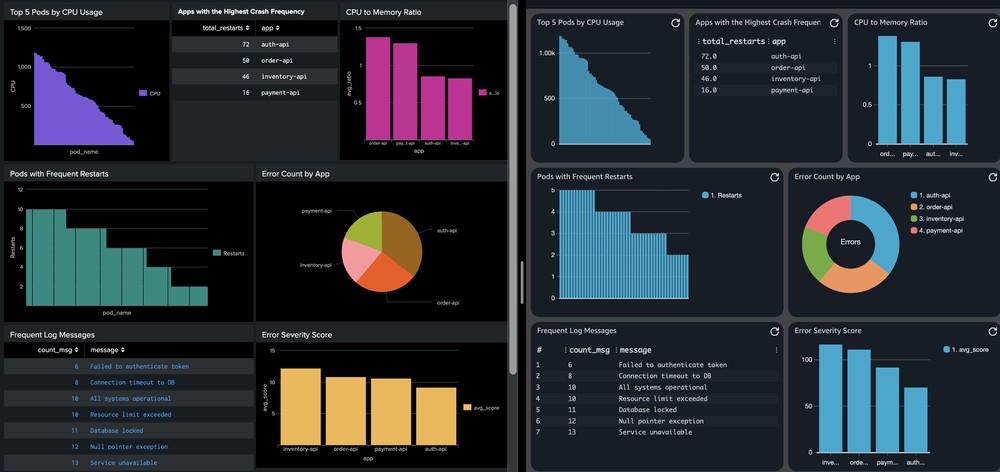
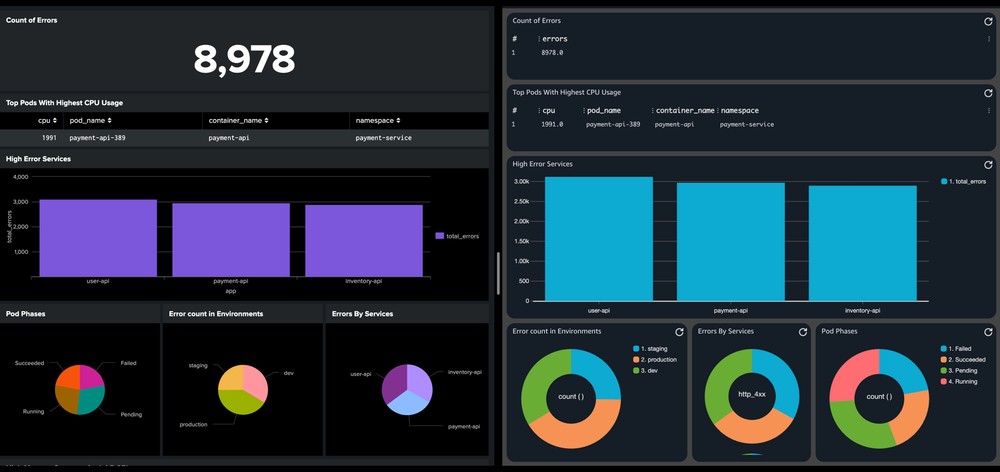
This service is delivered by our experts proficient in both Splunk and Amazon CloudWatch, leveraging our migration engine to automatically convert Splunk dashboards and alerts into CloudWatch equivalents, while preserving critical DevOps and incident management workflows through data integrity, tags, and configurations.

Features at a Glance ​

Accelerated migration

Crest Data’s migration engine to automatically convert dashboards and alerts from Splunk to Amazon CloudWatch

Cost Savings

60% cost savings vs. in-house or generalist services

Expert-level resources

Deep in-house expertise with both Splunk and Amazon CloudWatch.

Product Snapshots

Observability Insights

Cluster Health

Why Choose Crest Data?

With over 100 migrations delivered across various observability, SIEM and cloud platforms, Crest Data has earned a reputation as a trusted partner.

Get tailored guidance from our experts to ensure a smooth, successful migration.

Stay ahead with solutions that evolve to support the latest features and capabilities.

Splunk to Amazon CloudWatch Migration FAQs

Amazon CloudWatch is AWS's native monitoring and observability service. It collects and tracks metrics, logs, and events from AWS services, custom applications, and on-premises resources, providing a unified operational view of your AWS environment.

CloudWatch includes dashboards for visualizing resource health, alarms for automated notifications and operational responses, Logs Insights for log querying and analysis, and Container Insights for Kubernetes and ECS workloads. For organizations running workloads primarily on AWS, CloudWatch provides deep native integration with the services they already use. Crest Data's migration service handles the full transition from Splunk to CloudWatch, converting dashboards, alerts, and log queries while preserving your existing monitoring workflows.

Amazon CloudWatch serves several core observability functions:

Metrics collection — automatically collects performance metrics from all AWS services (EC2, Lambda, RDS, EKS, and more) as well as custom application metrics.

Log management — ingests, stores, and enables querying of log data via CloudWatch Logs and Logs Insights.

Alarms and notifications — triggers alerts based on metric thresholds and sends notifications through SNS, email, or third-party integrations.

Dashboards — provides customizable operational dashboards for monitoring AWS resource health and application performance.

Container monitoring — offers Container Insights for detailed monitoring of EKS and ECS environments.

When you're moving from Splunk to CloudWatch, Crest Data helps by matching up your current Splunk monitoring tools with the right CloudWatch features. This way, you don't have to worry about losing anything important during the switch. They make sure everything gets transferred smoothly, so you can keep track of what's going on with your systems.

Amazon CloudWatch includes a free tier that covers basic monitoring for AWS services, including standard metrics at 5-minute intervals, 10 alarm metrics, 3 dashboards with up to 50 metrics each, and 5GB of log data ingestion and storage per month. Detailed monitoring, custom metrics, additional dashboards, and Logs Insights queries are available on a pay-as-you-go basis beyond the free tier.

When you move from Splunk to CloudWatch, it's a good idea to get a sense of what your new costs will be. That's because CloudWatch pricing is based on how much you use it, and it grows with your AWS usage. To help with this, Crest Data does a cost modelling exercise as part of the migration process. This exercise looks at how much data you currently have in Splunk and what you're monitoring, to give you a better idea of what you'll likely spend on CloudWatch.

Amazon CloudWatch Logs is a tool that helps manage logs. It collects, stores, and lets you monitor and analyze log data in real-time. This data comes from various sources like AWS services, EC2 instances, Lambda functions, and applications that run in containers. You can also get log data from custom sources using the CloudWatch Agent or API. This means you can keep an eye on what's happening with your applications and services, and make sure everything is running smoothly. With CloudWatch Logs, you can get a better understanding of your system's performance and fix problems quickly.

Here's a rewritten version of the input text in a style similar to the human samples: When it comes to analyzing logs, having the right tools is crucial. That's where CloudWatch Logs comes in - it's got a powerful query interface called Logs Insights that makes it easy to dig into your logs and get the insights you need. Plus, it's got metric filters that can turn log patterns into metrics you can use to set up alarms and dashboards. And the best part? You're in control of how long you keep your logs - anywhere from one day to ten whole years. But what if you're making the switch from Splunk to CloudWatch? Don't worry, Crest Data has got you covered. They can take your Splunk saved searches and dashboards and convert them into Logs Insights queries and CloudWatch Dashboard widgets, so you don't have to start from scratch. This means you can keep on monitoring your logs just like you were before, without missing a beat.

Amazon CloudWatch retains metric data at different resolutions and durations:

High-resolution metrics (1-second): retained for 3 hours

Detailed metrics (1-minute): retained for 15 days

Standard metrics (5-minute): retained for 63 days

Low-resolution metrics (1-hour): retained for 15 months

You can store logs for as little as one day or as long as ten years - or even keep them forever. This is because CloudWatch Logs lets you decide how long to keep logs for each group. If you need to keep logs for a long time, you can send them to Amazon S3, which is a cheap way to store them.

Data retention requirements are an important part of any Splunk to CloudWatch migration planning. Crest Data's migration assessment includes a review of your current Splunk retention policies and maps them to the appropriate CloudWatch configuration.

Start Your Journey with Us

Ready to transform your ideas into reality? Get in touch with our experts today and explore how we can partner for your success.