Skip links

Splunk to Dynatrace Migration

Simplify and accelerate the transition to Dynatrace

Splunk to Dynatrace Migration

Crest Data and Dynatrace have partnered to offer a service that simplifies and accelerates migration from Splunk to Dynatrace

via automation, expert-level resources and future-proof flexibility that evolves with customer needs.

Features at a Glance ​

Accelerated migration

Purpose-built tools enable faster, easier migration of dashboards and alerts to Dynatrace

Expert-level resources

Deep in-house expertise with both Splunk and Dynatrace

Future-Proof Flexibility

Designed to meet evolving customer needs, the Crest Data - Dynatrace partnership includes plans to broaden migration support beyond dashboards and alerts.

Product Snapshots

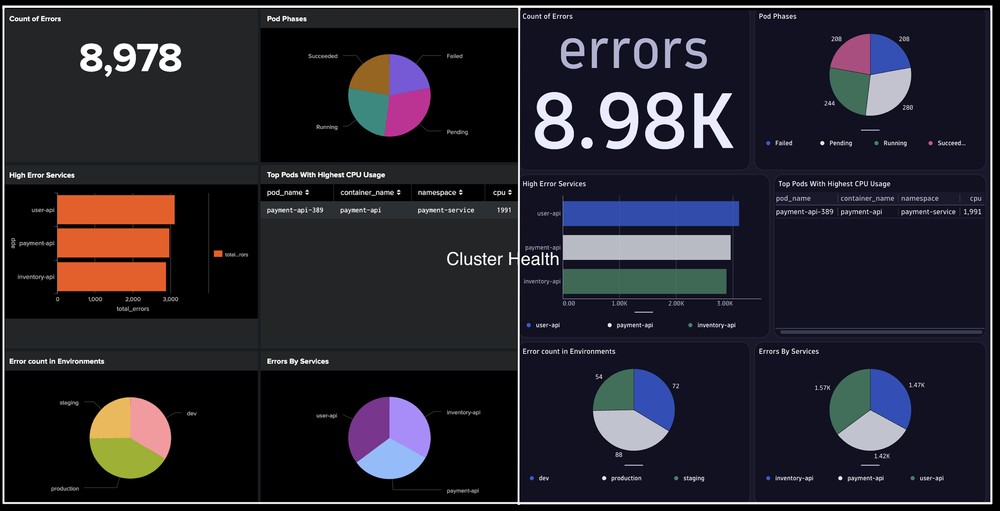
System Monitoring

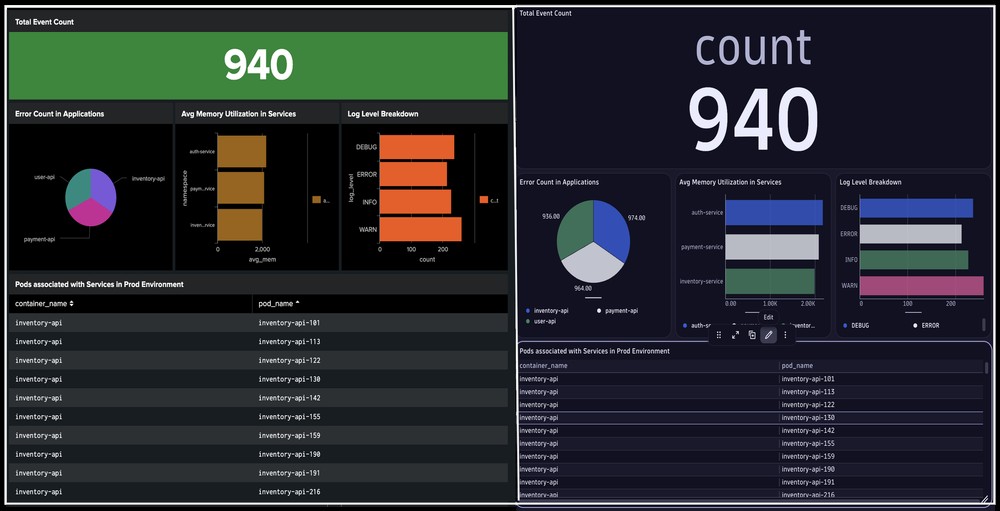
Server Insights

Why Choose Crest Data?

With over 100 migrations delivered across various observability, SIEM and cloud platforms, Crest Data has earned a reputation as a trusted partner.

Get tailored guidance from our experts to ensure a smooth, successful migration.

Designed to meet evolving customer needs, the Crest Data - Dynatrace partnership includes plans to broaden migration support beyond dashboards and alerts.

Splunk to Dynatrace Migration FAQs

Dynatrace is an AI-powered observability and application performance management (APM) platform. It provides full-stack monitoring across applications, infrastructure, cloud environments, and user experience, all underpinned by Davis AI, Dynatrace's automated root cause analysis engine that continuously monitors your environment and surfaces actionable insights.

Dynatrace is designed for big and complicated company systems, and it's known for being one of the best in its field, according to the Gartner Magic Quadrant for APM and Observability. When companies decide to switch from Splunk to Dynatrace, it's usually part of a bigger plan to update their observability systems. The engineers at Crest Data are experts in Dynatrace and have helped lots of big companies make the switch, with real results that you can read about in our case studies.

Dynatrace provides end-to-end observability across your entire technology stack. Key capabilities include:

Application Performance Monitoring (APM) — traces application transactions end-to-end, from the user's browser through to backend services and databases.

Infrastructure Monitoring — collects metrics from hosts, containers, Kubernetes clusters, and cloud services with automatic topology discovery.

Log Management — ingests and contextualises log data alongside metrics and traces for correlated analysis.

Digital Experience Monitoring — tracks real user interactions and synthetic test results across web and mobile.

Security — provides runtime application security and vulnerability detection through Dynatrace Application Security.

When migrating from Splunk, Crest Data maps your existing Splunk dashboards, alerts, and saved searches to the equivalent Dynatrace capabilities, ensuring continuity of your monitoring coverage from day one.

So, Dynatrace is really into OpenTelemetry - they support it fully and are even helping to make it better. This means Dynatrace can easily take in all the data it needs from OpenTelemetry, like traces, metrics, and logs, and it works with any app or service that uses the standard OpenTelemetry tools.

For organizations migrating from Splunk who are also planning to standardize on OpenTelemetry for future instrumentation, Crest Data's migration process includes configuring your Dynatrace environment to receive both legacy Splunk-forwarded data and new OTel-instrumented telemetry simultaneously ensuring a smooth transition without any observability gaps during the migration period.

Dynatrace has this thing called OneAgent - it's like a special tool that you put on each computer or server you want to keep an eye on. This can be a virtual machine, a regular server, or even a Kubernetes node. When you install OneAgent, it automatically figures out what's running on that computer, like all the different programs and services, and how they're all connected. Then, it starts collecting lots of information, like metrics, traces, and logs, without you having to set it up for each individual service. It just does it all on its own, making it really easy to get a clear picture of what's going on.

OneAgent communicates with the Dynatrace platform via ActiveGate, a secure communication layer that handles data routing and encryption. During a Splunk to Dynatrace migration, deploying OneAgent across your environment is typically completed in the early phases, it immediately begins building a live topology map of your infrastructure, which forms the foundation for your new observability setup and accelerates the overall migration timeline.


Moving from Splunk to Dynatrace with Crest Data usually takes around 4 to 10 weeks. This time frame depends on a few things: how many dashboards and alerts you have set up in Splunk, the types of data you're working with, and how complex your infrastructure is for deploying OneAgent. The more you have to migrate, the longer it's going to take.

Here's how it works: Crest Data uses a special tool that automatically converts Splunk dashboards and searches into Dynatrace format. At the same time, our experts who are certified in Dynatrace take care of setting up the OneAgent and configuring the environment. We've already helped over 100 companies move to a new platform, and we have a detailed case study that shows how we did it with one of our clients who switched from Splunk to Dynatrace - we can share it with you if you're interested. Before we start any project, we do a free assessment to figure out exactly what needs to be done and how long it will take.

Start Your Journey with Us

Ready to transform your ideas into reality? Get in touch with our experts today and explore how we can partner for your success.