Splunk to Datadog Migration
Automation for Hassle-free, Error-free Migration
The Splunk to Datadog Migration App by Crest Data simplifies the process of moving your monitoring and logging data from Splunk to Datadog.
Overview
Splunk to Datadog Migration
by Crest Data simplifies the process of moving your monitoring and logging data from Splunk to Datadog.
Get StartedOur solution automates the transformation of visualizations, alerts, and data queries, from Splunk SPL to Datadog specific formats, ensuring that your data remains consistent and accurate throughout the transition. This tool enables seamless adaptation of your existing Splunk setups to Datadog’s powerful observability platform, reducing the complexity and risk involved in manual migration processes.
Highlights
Features at a Glance
Automated Visualization Conversion
Effortlessly transform Splunk dashboards and alerts into Datadog-ready formats.
Query Adaptation
Convert Splunk SPL queries into Datadog’s query syntax with minimal effort.
In-Depth Migration Insights
Access detailed reports that provide a clear overview of migration successes and any issues encountered.
Flexible Migration Paths
Choose between various migration strategies that suit your specific needs, whether remote or offline.
Product Snapshots
Inside the Splunk to Datadog Migration App
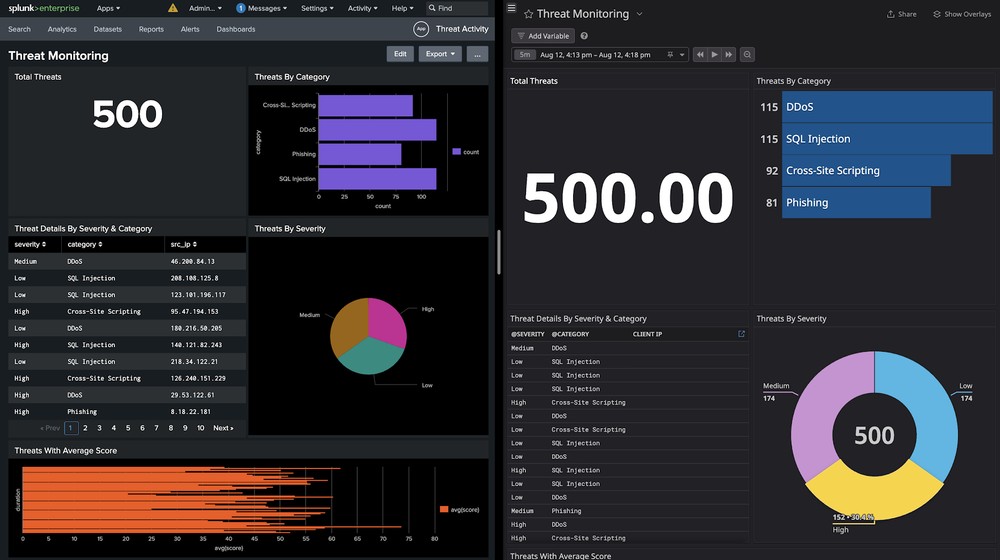
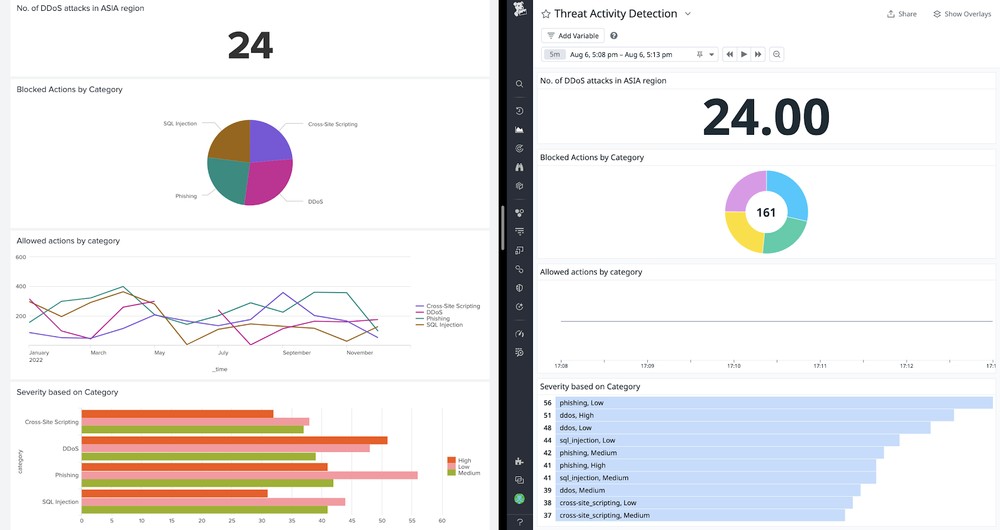
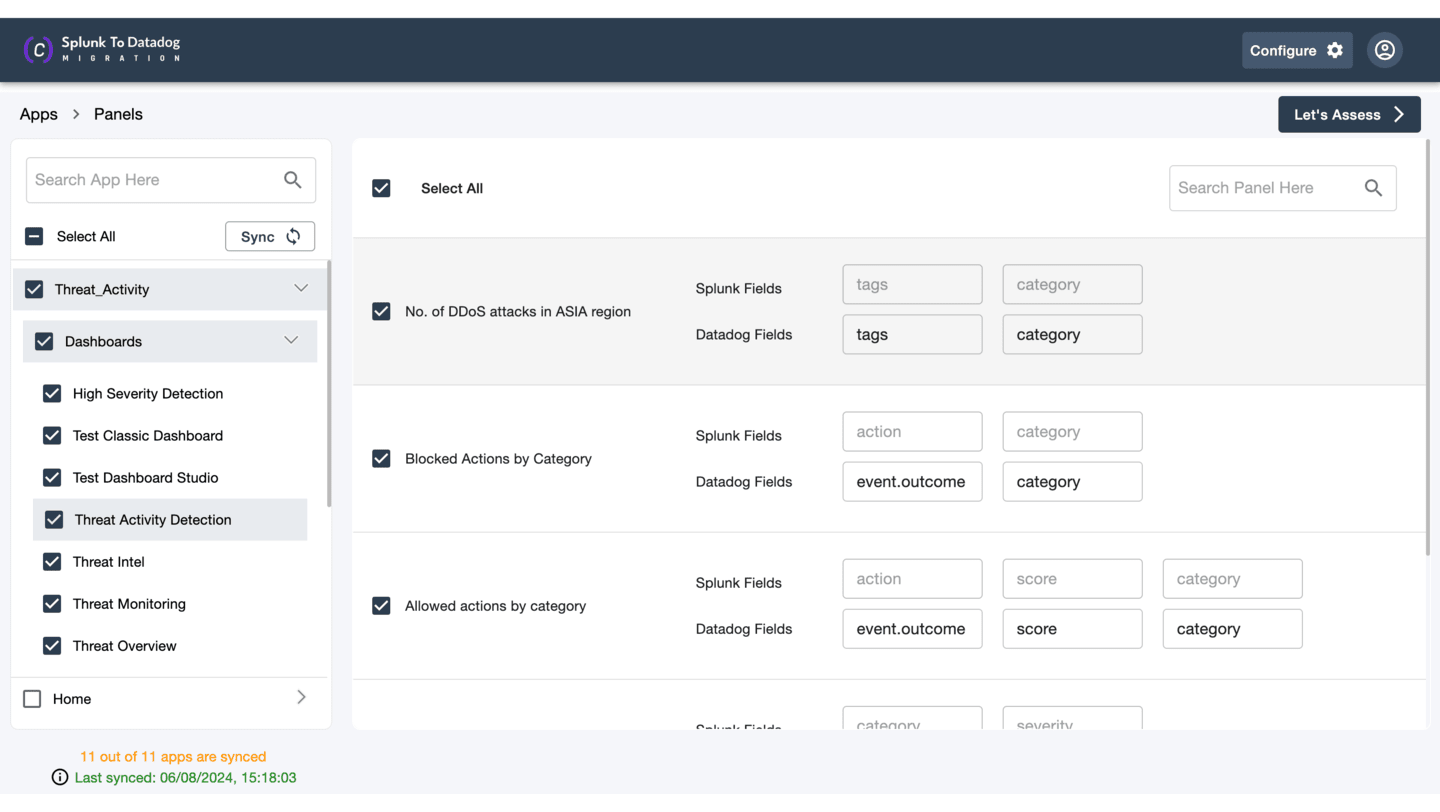
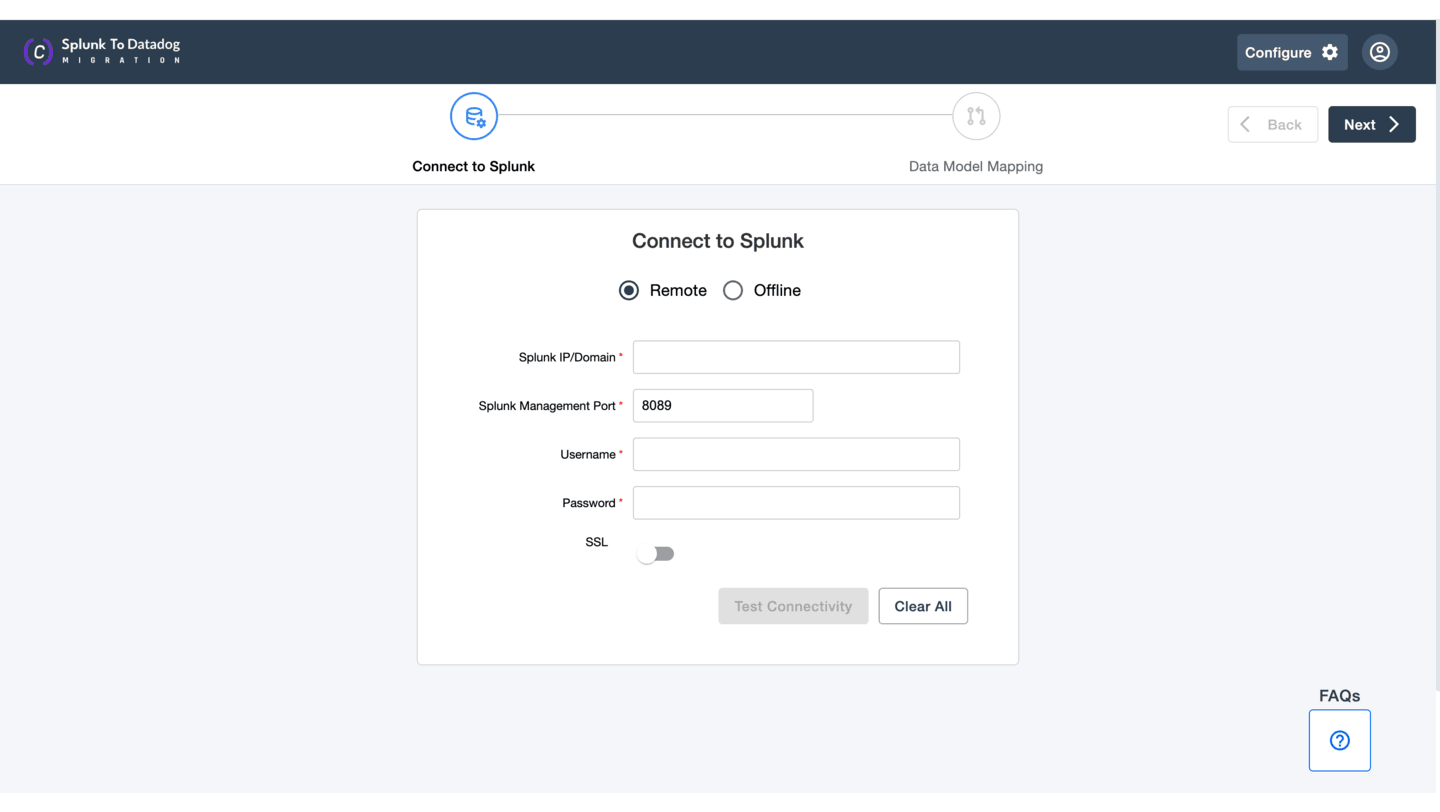
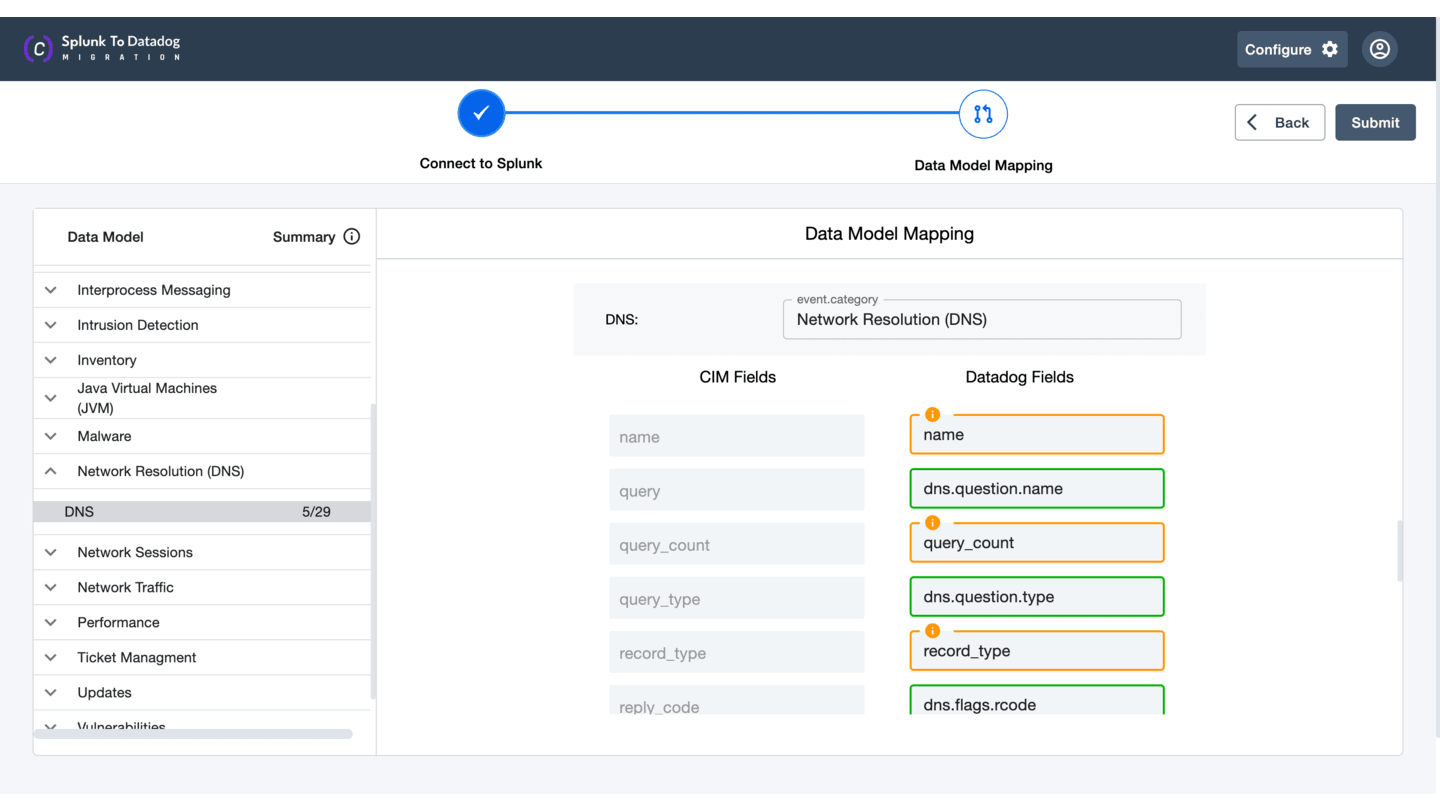
From configuration and data model mapping to live threat views — a screen-by-screen look at how the app moves your setup from Splunk to Datadog.
1 / 5

01
Threat Monitoring

02
Threat Activity Detection

03
App List

04
Configuration

05
Data Model Mapping
Why Choose Crest Data
Expertise, automation, and dedicated support for every Datadog migration
Industry-Leading Expertise
- With extensive experience in data migration and analytics
- Crest Data is a trusted leader
Efficiency and Precision
- Our platform automates complex tasks
- Ensuring quick, accurate results while minimizing errors
Dedicated Support
- Receive personalized support from our expert team
- Throughout your migration process
Future-Proof Solutions
- We continuously update our platform
- To include support for new features and capabilities
Ready to migrate?
Talk to our migration experts and kick off your Splunk to Datadog journey with confidence.
Datadog Migration by the Numbers
Scale that backs every Splunk to Datadog migration
0
Successful Datadog Migrations
0
Faster Migrations
0
Cost Savings
24×7
Managed Services
Resources
Go deeper on Splunk to Datadog Migration
Webinar
Webinar on Migrating from Legacy Platforms to Datadog
User Guide
Splunk to Datadog Migration Platform User Guide
Step-by-step reference for planning, configuring, and running your migration end to end.
Inside the guide
- Installation & configuration
- Dashboard & alert conversion
- Query language mapping (SPL → Datadog)
- Data model mapping & migration workflow
Frequently Asked Questions
Splunk to Datadog Migration FAQs
Answers to the questions we hear most often about migrating from Splunk to Datadog with Crest Data.
-
If you've worked with both, the difference is pretty clear. Splunk is incredibly powerful when it comes to log analysis and security use cases, but it can feel heavy and a bit complex to manage at scale.
Datadog, on the other hand, feels more straightforward. It brings everything—metrics, logs, traces—into one place and is generally quicker to get up and running.
Most teams end up choosing based on what they value more: depth and control, or speed and simplicity.
-
It's not just a data move, it's more like rebuilding your setup in a new system, without losing what already works.
You're moving dashboards, alerts, saved searches, and pipelines. The tricky part is translating Splunk queries into something Datadog understands and making sure dashboards still make sense.
Done manually, it's time-consuming. With automation, most of that heavy lifting gets handled, and your team doesn't have to start from scratch.

-
Yes, that's already happened. Cisco completed its acquisition of Splunk in March 2024.
For most users, nothing changed overnight. But it has definitely made teams pause and think about the long term, especially around pricing, integrations, and where the product is headed.
Some are staying with Splunk, others are exploring alternatives. It really depends on what direction the business wants to take.
-
Yes, Splunk has been used as a SIEM for years, especially with its Enterprise Security setup. That's one of its strongest areas.
Datadog can handle similar use cases now with its Cloud SIEM. It may not feel identical, but it covers detection, monitoring, and investigation pretty well.
The important part during a migration is making sure those detection rules and workflows don't get lost in the process.
-
There's no one-size answer, but for most teams, it lands somewhere between 4 to 8 weeks.
A lot depends on how complex your current setup is; how many dashboards, alerts, and integrations you're running.
If you try to do everything manually, it can stretch much longer. With the right tools and a clear plan, it's usually faster and far less painful.
-
Datadog Bits AI is Datadog's suite of AI-powered agents designed to help engineering teams spend less time digging through data.
It looks at your alerts, logs, and system behavior and helps surface what actually matters, like possible root causes or next steps.
Once you've migrated, it starts working on top of your existing setup. So instead of changing how your team works, it quietly makes things faster and easier behind the scenes.
Get Started
Start your Splunk to Datadog migration today
Talk to our migration experts or install the Splunk to Datadog Migration App directly from the Datadog Marketplace.
Sales Email:
datadog-sales@crestdata.ai