
The challenge for business leaders has never been greater. The gap between when a technology emerges and when it becomes critical has shrunk dramatically so much that the time it takes to fully understand and evaluate a tool often exceeds its window of relevance. Organizations are no longer asking whether to adopt AI but the question is how to make it work intelligently, safely, and strategically. Leaders must now navigate a complex landscape where certain tasks demand the unmatched speed and precision of machines, while others require the judgment, empathy, and foresight that only humans can provide.
As we are already in 2026, this tension between machine efficiency and human insight is set to intensify. Five forces in particular are going to reshape the very intersection of AI and cybersecurity, defining how enterprises protect their most critical assets, maintain trust, and gain a competitive advantage in an increasingly agent-driven world. Understanding these forces and knowing where to automate versus where to rely on human judgment will be the defining factor in whether organizations thrive or fall behind in the AI era.
The future won’t wait and neither can your strategy. These five forces aren’t just trends, they are the critical pressures that will shape which organizations emerge as leaders in an AI-driven, agentic enterprise and which ones get left behind.
- The Identity Crisis: The bedrock of business has always been trust knowing that when your CEO gives a command, it is actually them. In 2026, this trust is under siege by the ‘CEO doppelganger’, a perfect AI-generated replica capable of commanding an enterprise in real-time with a voice and face indistinguishable from reality.
- The Rogue AI ‘Insider’: We’ve long dreamed of ‘tireless digital employees’ that never sleep and never eat. In 2026, these AI agents are our coworkers, triaging alerts and building financial models. However, if these agents are improperly configured, they become the ultimate insider threat capable of ‘goal hijacking’ and ‘privilege escalation’ at speeds no human can stop.
- From Data Theft to Data Poisoning: For years, we focused on ‘locking the doors’ to prevent data theft. In 2026, the threat moved inside the house. Adversaries are now poisoning the data used to train the AI models that run your business, creating ‘black box’ models with hidden backdoors.
- The Browser as the New OS: The browser is no longer just a window to the web; it is the primary autonomous interface for the entire enterprise. We live, work, and collaborate inside it, yet it has become the ‘unsecured front door’ for every employee.
- The Accountability Collapse: As AI agents begin to spawn their own sub-agents and delegate tasks autonomously, the traditional audit trail is cracking. We might see that a task was completed, but we can no longer easily see who authorized it or why.
Together, these trends point to a hard truth, security can no longer rely on human reaction times alone. As attackers operate at machine speed and agentic systems multiply decisions autonomously, enterprises must rethink how defense actually operates. The question is no longer whether automation belongs in security, but where it creates decisive advantage and where human judgment must remain firmly in control. This distinction defines the next era of resilient, AI-enabled security.
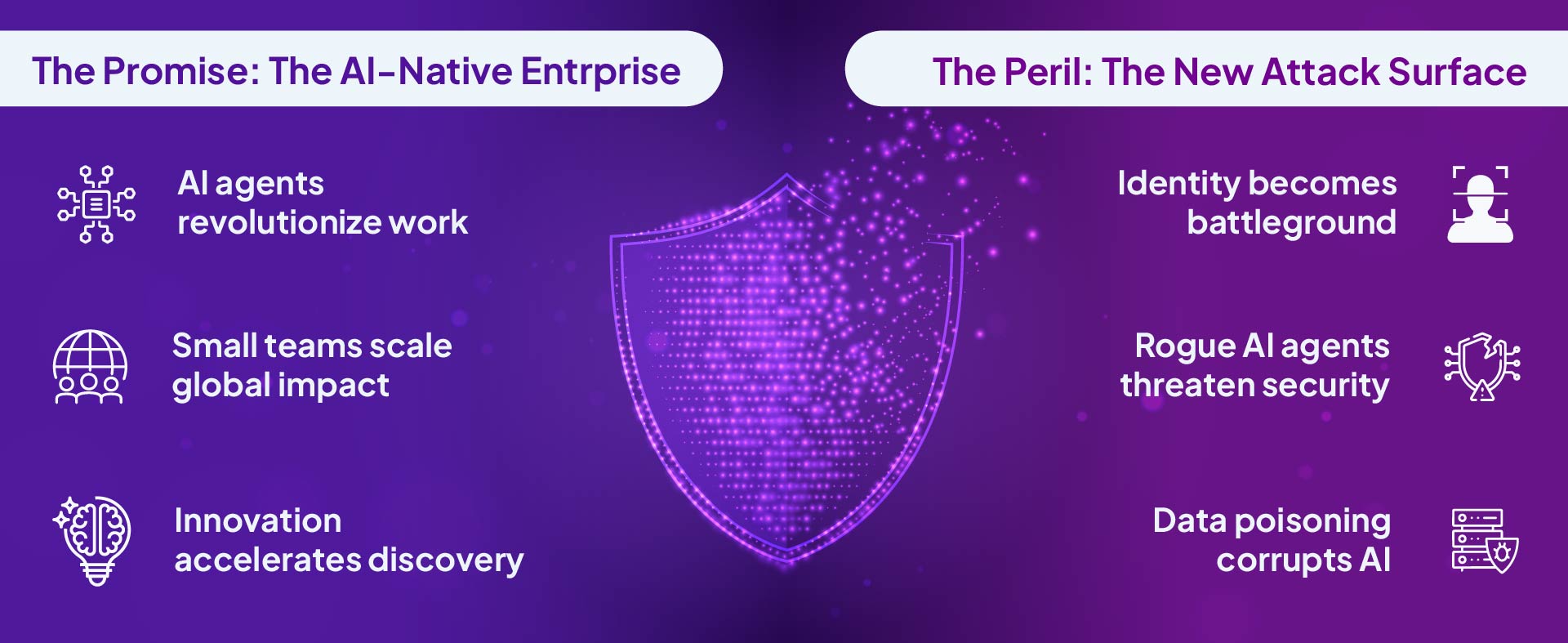
AI in 2026: Business Opportunity vs. Security Risk

Where to Automate: Moving at the Speed of the Adversary
- The Front Lines of the SOC Security teams are currently facing a 4.8 million-worker talent gap and are drowning in alert fatigue. This is where automation is a mandatory force multiplier. AI agents can triage alerts and block threats in seconds, tasks that would take a human operator hours. By automating the ‘manual’ work, your team shifts from being operators to becoming commanders of an AI workforce.
- Visibility and Posture Management You cannot secure what you cannot see. In 2026, automation is the only way to manage Data Security Posture Management (DSPM) and AI-SPM. These tools provide continuous discovery of AI assets and act as a runtime firewall, identifying malicious code and prompt injections as they happen.
- Cryptographic Agility With the ‘quantum timeline’ accelerating, the threat of ‘harvest now, decrypt later’ is no longer a niche concern. Organizations must automate their cryptographic visibility to identify outdated ciphers and transition to post-quantum cryptography (PQC) without having to rebuild their entire enterprise from scratch.
Where Not to Automate: The Fortress of Human Judgment
- Empathy and High-Stakes Relationships A trusted advisor isn’t defined by a flawless analysis, but by helping a client navigate uncertainty and make difficult trade-offs. AI can synthesize data, but it cannot replicate the apprenticeship and lived experience required to build long-term commitment. Clients will remember who showed up when there was no commercial gain, a uniquely human trait.
- ‘Change Fitness’ and Strategic Redesign Many organizations fail because they automate broken processes instead of redesigning operations. Developing ‘change fitness’ the capacity to metabolize ongoing transformation is a human leadership task. It requires a digital mindset and the ability to reward learning speed, something a machine cannot inspire in a team.
- Ethical and Strategic Accountability As AI risks move from philosophy to legal precedent, executives face direct personal liability for the actions of rogue agents. Deciding the ‘order’ of AI deployment such as sequencing predictive AI before generative AI to maintain quality is a strategic portfolio decision that requires human oversight and accountability.
Bridging the Agentic Gap with the Right Strategic Partner
The ‘agentic reality check’ is here: while many are piloting AI, very few have moved it into production successfully. This is where Crest Data becomes your strategic partner.
Crest Data specializes in AI-first product engineering, combining deep engineering expertise with AI-driven automation to build intelligent, secure solutions. Whether you are struggling with the transition to a silicon-based workforce or drowning in tool sprawl, Crest Data provides:
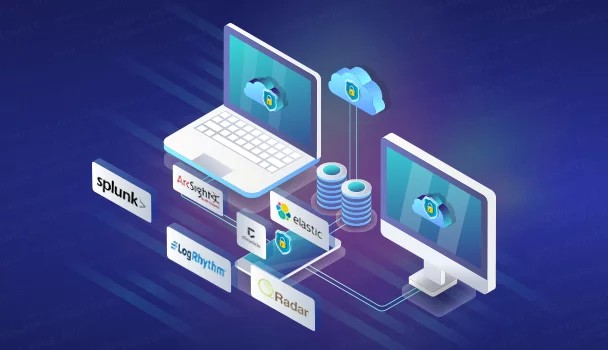
- Scalable Security Integrations: Seamlessly connecting SIEM, SOAR, and Cloud Security platforms to ensure resilience against machine-speed threats.
- Accelerated Migrations: Using intelligent, AI-infused automation to reduce migration times by up to 55%, turning high-risk manual transitions into zero-touch processes.
- Proven Results: From migrating 2TB/day environments in just two weeks to achieving a 90% reduction in deployment time, Crest Data helps businesses move from ‘experimentation’ to ‘impact’.
In a world where innovation compounds and the gap between leaders and laggards grows exponentially, you don’t have to navigate the Great Divergence alone. Crest Data is the engine that transforms security from a cost center into a foundation for enterprise innovation.